The cheapest entry point – but read the certification
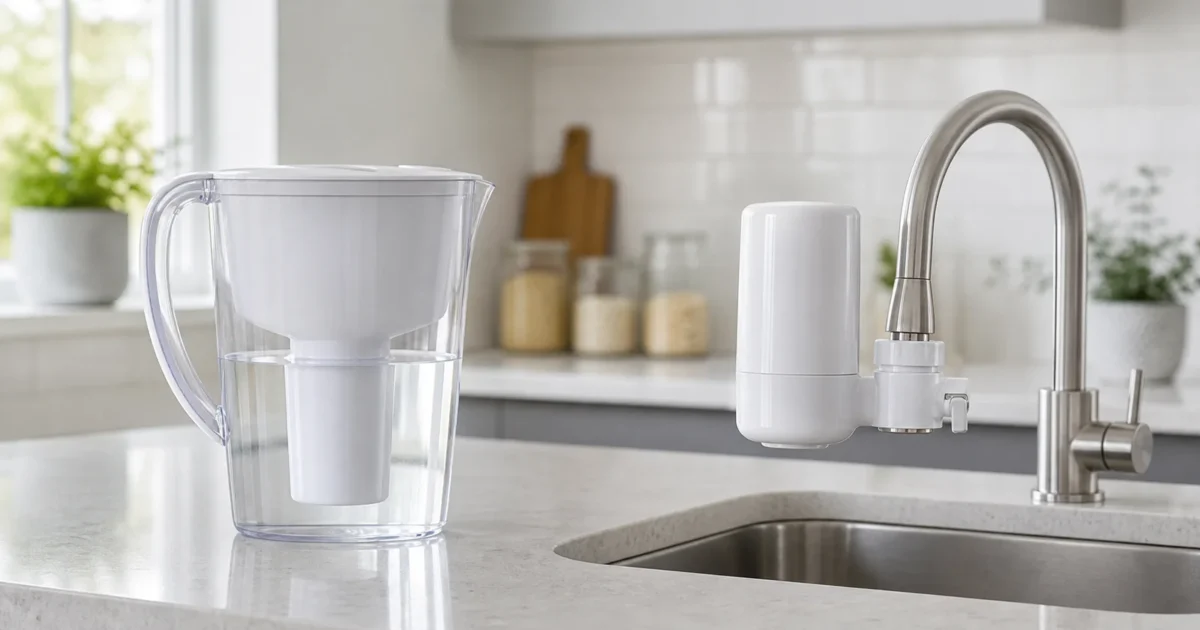
A $30 pitcher or a faucet-mount filter is the lowest-cost way to improve drinking water, and for many homes it’s enough. The trap is that certification varies enormously between models that look identical on the shelf: one Brita carries only an aesthetic (taste/odor) claim while another in the same lineup is certified for lead. We sort that out so you buy for what you actually want to remove.
“Filters lead” and “improves taste” are different NSF claims. A pitcher that improves taste may do nothing for lead. Match the certified claim to your goal.
What to know before you buy
- Pitcher standards are mostly brand-proprietary. Unlike whole-house Big Blue cartridges, pitcher filters generally fit only their own brand’s pitcher – so the choice is which system to buy, not a universal cartridge.
- Claim levels matter most here. Check whether the model is certified to NSF/ANSI 42 (taste/odor) only, or also 53 (lead, cysts) and 401 (emerging contaminants). Those claims map to the contaminants the EPA regulates under its national drinking water standards.
- Faucet-mount vs pitcher: faucet-mount filters often carry broader certifications and higher capacity; pitchers are simpler and cheaper. Both are point-of-use.
Start with your comparison
- Brita: which one removes what? -> Brita Elite vs Standard: What Each Filter Is Actually Certified to Remove – the real certified-claim difference (Standard OB03 vs Elite/Longlast+ OB06), capacity, and what neither does.
- ZeroWater vs Brita? -> ZeroWater vs Brita: TDS Numbers vs Certified Reduction – what a TDS meter does and doesn’t tell you, certified lead reduction, filter life, and the honest cost trade-off.
Filtering at the fridge instead? Start with the Which Filter Fits finder.
Are pitcher water filters certified for lead?
Some are, many are not. A pitcher certified to NSF/ANSI 53 for lead reduction will say so specifically; one with only an NSF 42 claim addresses taste and odor, not lead. Check the model’s certification.
Do pitcher filters from different brands interchange?
Generally no – pitcher filters are designed for their own brand’s pitcher. The decision is which system to buy, not a universal cartridge.
Is a faucet filter better than a pitcher?
A faucet-mount filter often has higher capacity and broader certifications, but a pitcher is cheaper and needs no installation. Match the certified claim to what you want to remove.
Related guides
Boil-Water Advisory Checklist: What to Do During and After [2026]
A boil-water advisory checklist only works if you follow it in the right order, and the order is…
Boil-Water Advisory: What Your Filter Can and Cannot Do
Your phone buzzes with a boil-water advisory, and your first instinct is to check the pitcher filter on…
NSF Filter Certifications Explained: 42 vs 53 vs 58 vs 401 vs P473
NSF filter certifications only mean something when two conditions are both true: the exact product is listed by…