To get iron out of well water, you do two things in order: test the water to learn which kind of iron you have, then match a filter to that kind. There is no single “iron filter” that fits every well. The right answer depends on whether your iron is dissolved or already rusted, how much of it there is, and whether bacteria are part of the problem. Skip the test and you will almost certainly buy the wrong equipment.
This guide walks the identification step first, because that is where most homeowners go wrong. Then it lays out the real options – oxidizing filters, air-injection systems, and softeners – and names the trade-off on each.
Test Before You Buy Anything
Iron above 0.3 mg/L is the EPA secondary standard – an aesthetic limit, not a health limit. Below that level you rarely see staining. Above it you get orange stains, a metallic taste, and rust in toilet tanks.
A proper test tells you three numbers that decide everything:
- Total iron, in
mg/L(also written as ppm). This sizes the equipment. - The iron type – ferrous (dissolved) versus ferric (particulate). This picks the technology.
- pH and hardness. Oxidation works poorly in acidic water, and hardness decides whether a softener is even in the conversation.
Use a certified lab or a state-recognized kit; the Minnesota Department of Health and most university extension services explain how to collect a representative sample. Order a panel that also reports manganese and hydrogen sulfide, because those almost always travel with iron and change the equipment you need.
One honest caution: a single test is a snapshot. Iron in wells fluctuates with the season and the water table. If your numbers sit near a decision boundary, test twice.
Ferrous vs. Ferric: The Distinction That Picks Your Filter
This is the core of the whole problem, so be precise about it.
Ferrous iron is dissolved. The water looks clear straight from the tap, then turns orange or brown after it sits in a glass or a toilet tank for a few hours as it meets air. Because it is dissolved, you cannot filter it directly – there is nothing solid to catch. You first have to oxidize it into a solid.
Ferric iron is already oxidized. The water comes out of the tap visibly rusty, cloudy, or orange. It is a particle, so a filter can catch it as-is.
The practical rule: clear-now-orange-later means ferrous; orange-from-the-tap means ferric. Many wells carry both. Mid Atlantic Water and other field references describe the same clear-glass test you can run at your own sink in an afternoon.
Why this matters for your wallet: a sediment-style cartridge that handles ferric iron does almost nothing for ferrous iron. And an oxidizing system sized for ferrous iron is overkill if all you have is a little particulate rust. Match the tool to the type.
The Rotten-Egg and Iron-Bacteria Overlap
Iron problems rarely arrive alone. Two overlapping issues confuse the diagnosis.
The first is hydrogen sulfide – the rotten-egg smell. Per the Minnesota Department of Health, that odor can be naturally occurring gas, the work of sulfur bacteria, or a reaction inside your water heater. It is not iron, but the same oxidizing equipment that removes iron often removes hydrogen sulfide too, which is why people conflate them.
The second is iron bacteria. These produce a slimy, rust-colored buildup that clogs wells and plumbing. The Minnesota Department of Health’s iron bacteria guidance notes that the slime and odor are biological, not just chemical – and that sulfur bacteria can help iron bacteria grow. This matters because a plain filter does not solve a bacteria problem. Bacterial iron usually calls for shock chlorination of the well first; the same MDH guidance recommends a chlorine concentration close to but not above 200 ppm, with extra prep such as scrubbing the casing when iron bacteria are present.
If your test or your eyes point to slime and odor rather than clean orange staining, treat the bacteria before you spend money on a filter. A filter installed over a bacteria problem just becomes a place for the slime to grow.
How to Get Iron Out of Well Water: Matching the System
Once you know the type and the amount, the equipment choice is straightforward. Here are the three honest options.
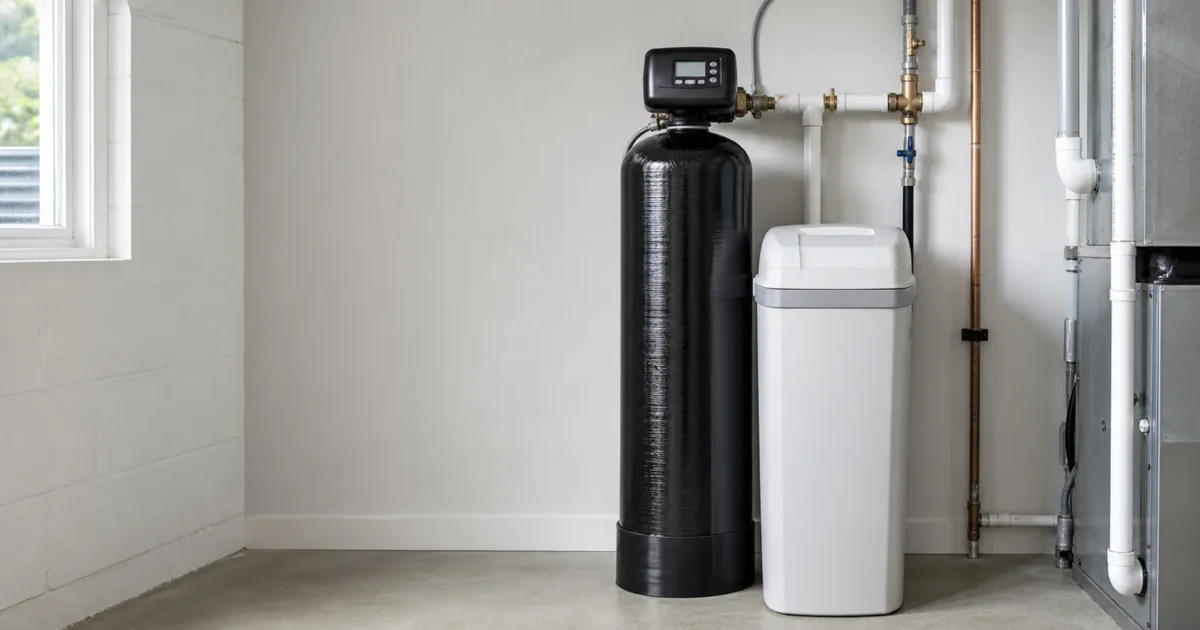
Oxidizing filters (catalytic / manganese-greensand media). These convert dissolved ferrous iron to filterable ferric iron inside a media tank, then trap it, and backwash periodically. They are the workhorse for moderate-to-high iron and handle manganese and some hydrogen sulfide as well. The trade-off: they need adequate pH (often above ~6.8) and regular backwashing, and greensand systems need periodic regenerant. NSF/ANSI 42 is the aesthetic standard that covers iron reduction; many oxidizing tanks instead carry NSF/ANSI 61 for material safety rather than a performance claim, so read the listing rather than the marketing.
Air-injection (air-charged) filters. A close cousin: they draw in a pocket of air to oxidize the iron, then filter it, with no added chemicals. They are clean and low-maintenance for clear-water (ferrous) iron and light sulfide. The trade-off is throughput – a heavily iron-laden well can overwhelm a single air-injection tank.
A water softener – for light dissolved iron only. A softener’s ion-exchange resin can pull out small amounts of ferrous iron along with hardness. But this is its weakest application. Manufacturer guidance from sources like Water-Right puts a standard softener’s reliable clear-water iron limit low – commonly around 1-3 ppm before fouling and orange resin set in. Above that, you need a dedicated iron system or a specialized softener rated for higher iron. The honest rule: do not buy a softener to solve a real iron problem. Buy it for hardness, and let it handle only the trace iron that comes along for the ride.
A few realities worth stating plainly: ferric-only iron at low levels may need nothing more than a backwashing sediment filter. High iron, manganese, and sulfide together usually point to an oxidizing or air-injection tank. And acidic water may need a neutralizer ahead of any iron filter to make oxidation work at all.
Pick the Right Equipment Without Overbuying
Use your test numbers to size, then sanity-check the spend.
If hardness is your main issue and iron is incidental, start with our water softener sizing calculator to right-size the resin – and confirm your iron sits in the low single digits before you rely on it for iron at all. If you are weighing a point-of-use system for drinking water on top of whole-house iron treatment, the reverse osmosis cost calculator shows the real per-gallon cost. And when you are matching a specific cartridge or unit to your setup, the which-filter-fits finder narrows the list.
Whatever you choose, confirm the certification yourself. Look up the exact model at info.nsf.org before you trust any iron or contaminant claim – certification is SKU-specific, and a brand being “NSF certified” somewhere does not mean the model in your cart is listed for iron.
Can a water softener remove iron from well water?
Only a little, and only dissolved (ferrous) iron. A standard softener reliably handles roughly 1-3 ppm of clear-water iron before the resin fouls and stains orange, per Water-Right. For higher iron, a true iron problem, or any ferric (rusty) iron, use a dedicated oxidizing or air-injection filter instead.
How do I tell ferrous iron from ferric iron at home?
Run the water into a clear glass. If it is clear at first and turns orange or brown after sitting an hour or two, that is ferrous (dissolved) iron. If it comes out rusty or cloudy straight from the tap, that is ferric (particulate) iron. Many wells have both, which is why a lab test is still worth doing.
Why does my iron water smell like rotten eggs?
That smell is usually hydrogen sulfide, not iron itself. Per the Minnesota Department of Health, it can be naturally occurring gas, sulfur bacteria, or a reaction in your water heater. Iron and sulfide often occur together, and the same oxidizing equipment frequently removes both – but confirm with a test that includes hydrogen sulfide.
Is iron in well water dangerous to drink?
The 0.3 mg/L iron limit is an EPA secondary (aesthetic) standard, about staining and taste rather than direct health harm at typical levels. The bigger concern is what travels with it – iron bacteria, sulfur bacteria, and other contaminants – which is why a full well-water panel beats testing for iron alone.
Do I need to disinfect my well before installing an iron filter?
If you have iron bacteria – rust-colored slime, odor, clogging – yes. The Minnesota Department of Health recommends shock chlorination of the well first, with chlorine near but not above 200 ppm. Installing a filter over an untreated bacteria problem just gives the slime a new place to grow.
Related guides
Water Softener Salt Types: Rock vs Solar vs Evaporated
The short answer: of the three common water softener salt types, evaporated salt pellets are the best choice…
Well Water Smells Like Rotten Eggs: What It Is and Which Filter Fixes It
When your well water smells like rotten eggs, the cause is almost always hydrogen sulfide gas (H2S) dissolved…
What Size Water Softener Do I Need? Sizing by Hardness and Household
The short answer to “what size water softener do I need?” is the one that matches your daily…