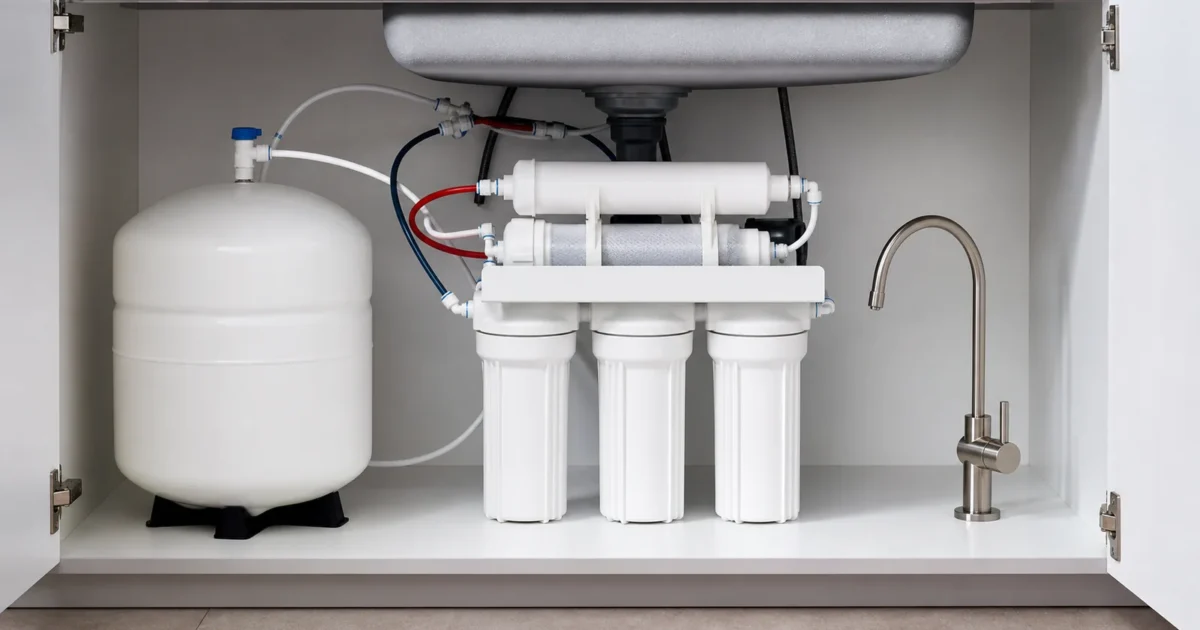
Reverse osmosis, decided honestly
Reverse osmosis is the most thorough point-of-use treatment most homes can buy – and it has real trade-offs we’ll name out loud: an upfront cost, ongoing filter replacements, and water sent to drain. Whether it’s worth it depends on your water and what you’re trying to fix. This hub helps you decide before you spend.
RO removes a very wide range of dissolved contaminants, including lead, PFAS (when certified), nitrates, and total dissolved solids – things a basic carbon filter leaves behind. It also removes beneficial minerals and uses some water to drain. Both are true; we help you weigh them.
Start with your question
- “Is it actually worth it for me?” -> Is Reverse Osmosis Worth It? An Honest Cost Breakdown – upfront + replacement + water-waste costs vs benefits, and who it isn’t worth it for. Run your own numbers in the RO cost calculator.
- “Whole-house or under-sink?” -> Whole House Water Filter vs Under-Sink RO: Which Solves What – point-of-entry vs point-of-use, and why many homes pair them.
- “I’m worried about PFAS” -> How to Remove PFAS From Water: Which Filters Are Actually Certified – the NSF/ANSI 53 + P473 certifications that matter, and which options carry them.
- “How often do I change RO filters?” -> How Often to Change Reverse Osmosis Filters (by Stage) – pre-filters, carbon, membrane, and post-filter cadence, and what skipping them costs.
- “Does my fridge filter remove lead?” -> Does a Refrigerator Water Filter Remove Lead? What NSF 53 Actually Means – the lead-reduction standard, how to verify it, and the honest truth that many filters do not.
What RO does and doesn’t do
- Removes well: lead, fluoride, nitrates, arsenic (with the right membrane), PFAS (NSF-certified systems), and most dissolved solids.
- Doesn’t fix: whole-house issues (sediment at every tap, hard-water scale, well-water sulfur smell) – those are point-of-entry problems. RO treats the water at one faucet.
- Costs to keep in mind: membrane + pre/post filters on a cadence, and a drain ratio (older systems waste more; modern tankless designs waste less).
Run the numbers
-> Open the RO cost calculator – enter upfront cost, filter cadence, and usage to see your true cost per gallon.
Does reverse osmosis remove PFAS?
A reverse osmosis system certified to NSF/ANSI 53 and/or P473 for PFOA/PFOS can substantially reduce PFAS. Look for that specific certification in the NSF certified-product database – not every RO system is tested for it.
Does RO remove healthy minerals?
Yes – RO removes most dissolved minerals along with contaminants. Some people add a remineralization stage for taste; it is not a health necessity for most diets.
How much water does reverse osmosis waste?
Older systems can send several gallons to drain per gallon produced; modern tankless/high-efficiency systems are far better. Factor it into the cost.
Is reverse osmosis better than a whole-house filter?
They solve different problems. RO is point-of-use (your drinking tap); a whole-house filter is point-of-entry (sediment/chlorine/hardness for the whole home). Many households use both.
Related guides
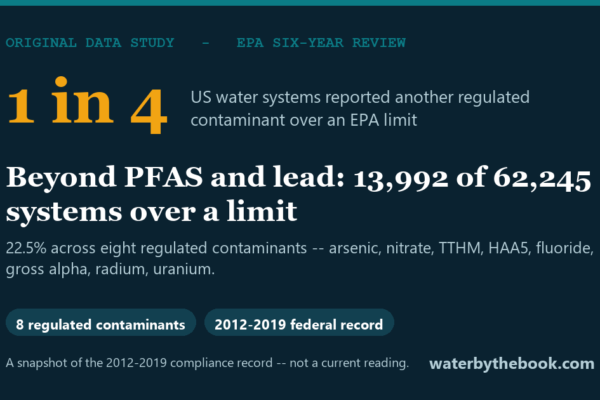
Beyond PFAS and Lead: About 1 in 4 US Systems Reported Another Contaminant Over a Limit
Correction (2026-06-29): a watchdog data-integrity audit corrected two things in the underlying data – the EPA Six-Year Review’s…
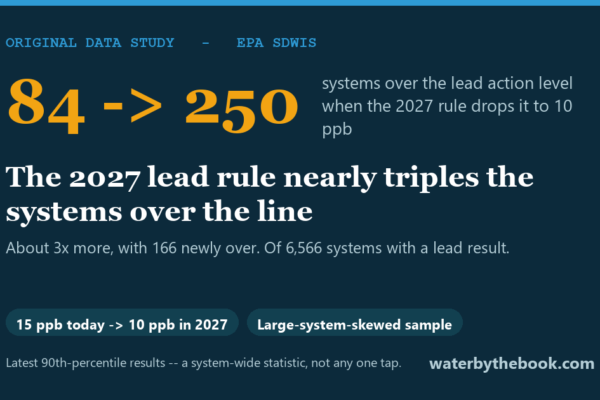
The 2027 EPA Lead Rule Nearly Triples the Water Systems Over the Line
Here is the honest national picture of lead in tap water, and it is not the one either…
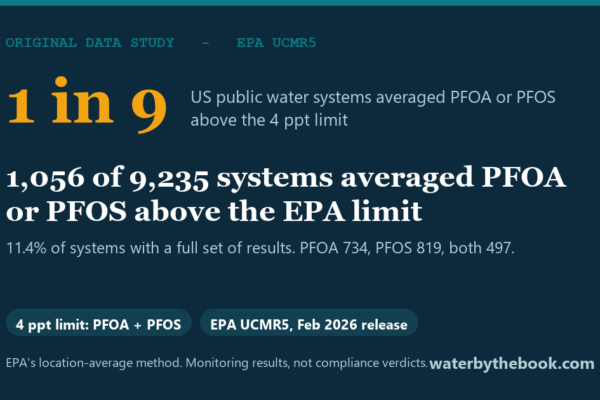
About 1 in 9 US Water Systems Averaged PFOA or PFOS Above the EPA Limit
About 1 in 9 US public water systems -- 1,056 of the 9,235 that reported a full set…