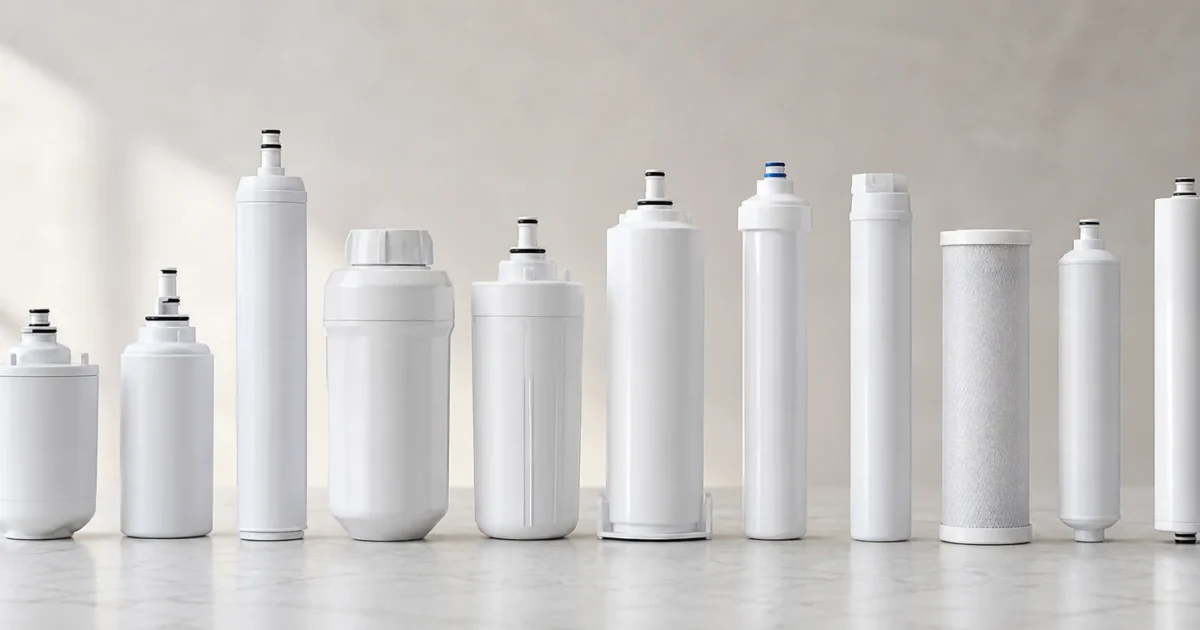
Find the filter that fits your fridge – by model, not by guesswork
A single refrigerator line can use different filters across model years, and “looks the same” is not “fits the same.” Before you buy anything, read the model printed on your current filter or in the fridge manual – then start here. Our Which Filter Fits finder maps that model to the OEM filter and the certified aftermarket options that genuinely fit it.
This is the one place water buyers can never get a straight answer: the OEM wants you on its $45 cartridge, the marketplace is full of “compatible” filters of wildly varying certification, and the AI overview can’t keep a cross-brand compatibility table current. We maintain that table. We tell you the OEM part number and whether a given aftermarket filter actually carries the NSF claim it implies.
The one rule, every time: confirm the model on your current filter first. We will not help you buy the wrong filter quickly.
Start with your situation
- You know your fridge but not your filter -> Which Water Filter Fits My Refrigerator? (Find Yours by Model) – how to read the model and the major OEM lines at a glance.
- You have an EveryDrop and want to pay less -> EveryDrop Filter Compatible Alternatives: Which Actually Fit (and Are Certified) – the EDR1-EDR4 part numbers and which aftermarket brands carry a real NSF certification.
- You’re deciding OEM vs aftermarket -> Refrigerator Water Filter Replacement Cost: OEM vs Certified Aftermarket – the real annual cost math and when OEM is worth the premium.
- You know your fridge brand -> jump straight to your line: Whirlpool/Maytag (EveryDrop), LG (LT1000P/700P/800P), Samsung (DA29 / HAF), GE (RPWFE vs RPWF – the chip), or Frigidaire (PureSource).
- You’re not sure when to change it -> How Often Should You Change a Refrigerator Water Filter? – the 6-month rule, what shortens it, and why an old filter can be worse than none.
What “certified” actually means
Filters carry NSF/ANSI claim levels, and they are not interchangeable:
- NSF 42 – aesthetic only (chlorine taste/odor, particulates). Most aftermarket filters stop here.
- NSF 53 – health (lead, cysts, some VOCs). The one that matters for safety claims. Fewer aftermarket filters carry it.
- NSF 401 – emerging contaminants (some pharmaceuticals/pesticides).
These levels test how well a filter reduces the contaminants the EPA regulates under its national drinking water standards. A filter can “fit” perfectly and still remove far less than the OEM it replaces. Always confirm the specific filter’s listing in the NSF certified-product database, not just the brand name. We measured how big that gap is: in our refrigerator-filter certification data study, no aftermarket brand carries NSF 53 (lead) across its whole line – it is SKU-specific – while 72% of the OEM filters they replace do. That is why the finder shows the cert level of every option.
Use the finder
-> Find my refrigerator filter – enter your fridge or current-filter model; get the OEM part plus certified aftermarket options that fit it.
How do I find my refrigerator’s water filter model?
Read the model printed on the current filter, or check the fridge manual / the sticker inside the fresh-food compartment. Enter that into the finder.
Are aftermarket refrigerator filters safe?
A certified aftermarket filter can be a good value, but certification varies. Many are NSF 42 (taste/odor) only; fewer are independently NSF 53 (lead) certified. Check the specific filter’s claim level before buying.
How often should I change a refrigerator water filter?
Most manufacturers recommend every 6 months, sooner if flow drops or taste changes. Hard or sediment-heavy water shortens that.
Why does my new filter say it fits but the light won’t reset?
Some fridges (e.g. GE RPWFE) use an RFID chip; certain aftermarket filters need a workaround or won’t clear the indicator. Confirm chip compatibility before buying.
Related guides
Midea Refrigerator Water Filter: MIWF6200 vs MIWF8200 vs MIWF8900
Midea currently sells three refrigerator water filters – MIWF6200, MIWF8200, and MIWF8900 – and mixing them up is…
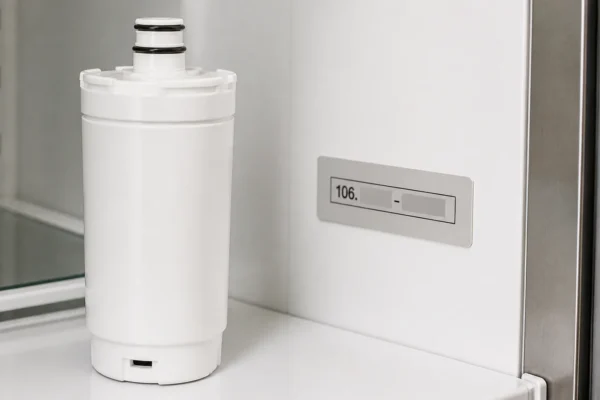
Kenmore Refrigerator Water Filter: Cross-Reference by Model
Kenmore doesn’t build refrigerators. It’s a private-label brand, so your Kenmore refrigerator water filter is actually determined by…
Does a Refrigerator Filter Remove PFAS? What NSF P473 Actually Certifies
Does a refrigerator filter remove PFAS? Not in any certified sense we can find. We checked every refrigerator…